How to Choose the Right Digital Marketing Partner for Your Business
Most businesses pick a marketing partner the same way: a deadline is close, someone recommends a name, and a call gets booked. A few months later, the results don’t match the promises, and everyone is frustrated.
The problem usually isn’t the partner. It’s that nobody wrote down what the business actually needed before the search began. Let’s fix that, so your next hire works out.
Start With the Gap, Not the Agency
Before you talk to anyone, finish this sentence: “We need help with ___, and we’ll know it worked when ___.”
Maybe your team has no one who understands search ads. Maybe your website gets visitors but no enquiries. Maybe you’re launching a new brand and nobody has time to build the identity. Each of these points to a different kind of help, so spend ten minutes on this first. It will make every later conversation shorter.
Know Your Options
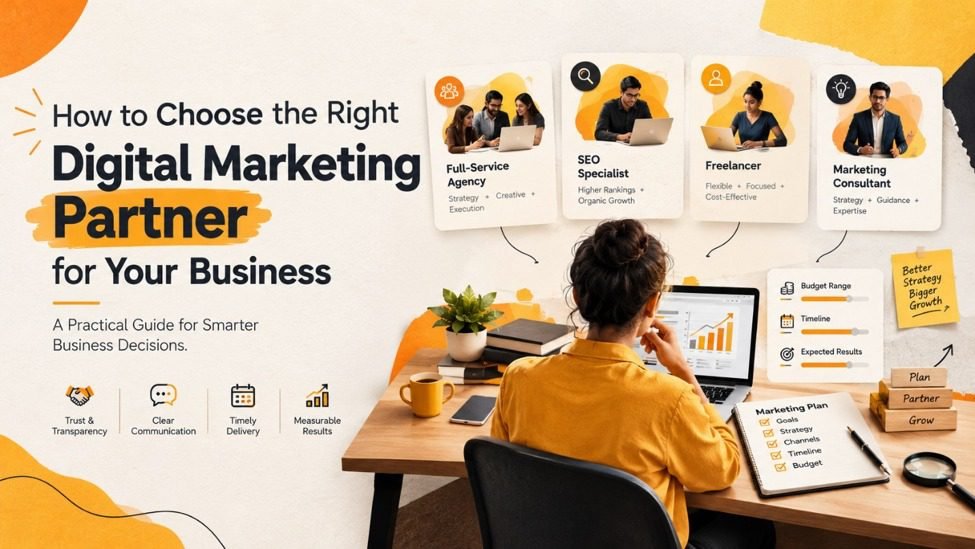
There are four common routes. None is better than the others in every case.
A full-service agency suits you when several things need to work together, such as your website, ads, social media and branding. One team keeps the message consistent. If you only need one thing, this can be more than you need to pay for.
A specialist agency focuses on one area. If your main goal is ranking on Google, a dedicated SEO company will usually go deeper than a generalist. The same goes for performance marketing if you’re running paid campaigns and need every rupee tracked.
A freelancer works well for a small, clear task, like designing a set of posters or editing a video. The risk is capacity. If they fall ill or get busy, your work waits.
A consultant helps when you’re not sure what the problem is. They give direction and a plan, but you’ll usually need someone else to carry it out.
If you’re unsure which one fits, that’s normal. A good partner will tell you honestly when you need something different from what they sell.
Check You’re Ready to Work With Someone
Hiring outside help only works if a few things are in place on your side:
- Someone owns the relationship. Even a great agency needs a person on your team who answers questions and approves work quickly.
- You have a realistic budget. Cheap and fast and excellent rarely come together. Our own About page gives a rough idea of what small businesses in Chennai typically spend each month.
- You can share access and information. Delays in logins, brand files or approvals slow results more than most people expect.
If any of these are missing, fix them first. Otherwise even the best partner will struggle.
Write a Simple Brief
You don’t need a fancy document. One page is enough. Cover these points:
- What your business does and who your customers are
- The single main goal for the next three to six months
- What you’ve already tried, and what happened
- Your monthly budget range
- How you’ll measure success (leads, sales, enquiries, followers)
A budget range helps more than people think. If you say nothing, proposals will be guesses. If you give a range, partners can suggest what’s realistic inside it.
Questions Worth Asking Every Partner
A polished pitch can hide a lot. These questions bring out the real picture:
- Who will actually work on my account? Ask for names, not job titles.
- Have you worked with businesses like mine? Look at their portfolio and ask about results, not just designs.
- What will you report, and how often? Vague answers like “monthly updates” aren’t enough. You want to see numbers tied to your goal.
- What happens if results are slow? Good partners explain how they adjust. Weak ones go quiet.
- Can I talk to a current client? If they hesitate, treat it as a warning.
- What costs extra? Ad spend, tools, shoots and revisions should be clear from day one.
Red Flags to Watch For
- Guaranteed rankings or guaranteed sales
- No questions about your business before sending a proposal
- A price with no breakdown
- A proposal that looks copied from someone else’s brief
- Pressure to sign this week “before the offer ends”
- Reports full of vanity numbers like impressions, with no leads or sales
Any one of these doesn’t mean you must walk away, but ask for a clear explanation.
What a Good Start Looks Like
You’ll know you’ve found a good partner by how the first few weeks feel. There’s a proper discovery conversation about your business. You get a clear plan with timelines and costs before work begins. You know who is on your team. Nothing moves forward without your approval.
That’s how we work at Ayn Media. We begin with a discovery call, build a strategy, set up the right specialists, agree the plan and budget with you, and then track results as we go. It’s a simple process, but it’s the part many agencies skip.
Pick One Piece to Test First
If you’re nervous about committing, start small. Choose one clear project, like refreshing your branding, building a new website, or running a three-month social media campaign. Watch how the team communicates, how they handle feedback, and whether they deliver on time. That tells you more than any presentation.
Final Thoughts
The right marketing partner isn’t the cheapest or the loudest. It’s the one who understands your goal, is honest about what’s realistic, and shows you the numbers. Spend your time on the brief and the questions, and the choice usually becomes clear. Still weighing your options? Read about Ayn Media and how we compare, or book a conversation with our team. We’ll tell you honestly whether we’re the right fit.