Google’s September 2026 Spam Update: What It Means for Your Website
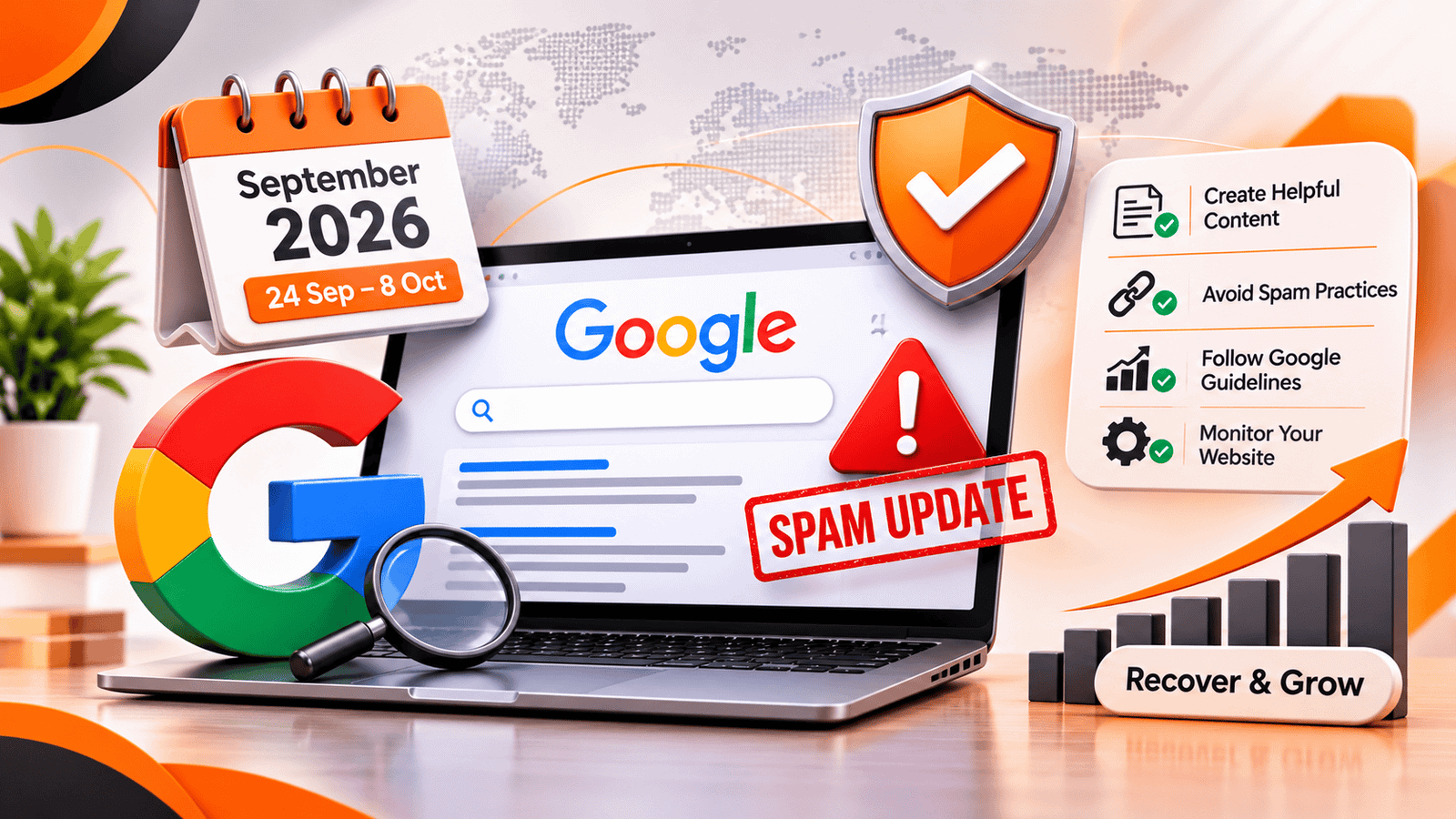
If your traffic took an unexpected turn between late September and early October, there may be a reason. Google released its September 2026 spam update on 24 September and confirmed the rollout as complete on 8 October 2026. Understanding what changed, and what didn’t, helps you respond calmly instead of making rushed changes.
According to Google’s Search Status Dashboard:
- Start: 24 September 2026, 9:15 a.m. Pacific time (about 9:45 p.m. in India).
- Finish: 8 October 2026.
- Reach: worldwide, across all languages, affecting search ranking.
In plain English, Google ran an improved round of spam detection across the web. Sites that follow its guidelines have little to worry about, but it’s a good moment to check yours.
What is a Google spam update?
Google’s spam detection works all the time. A spam update marks a notable improvement to those systems, such as SpamBrain, its AI-based spam-prevention system. Pages that break Google’s spam policies may rank lower or, in serious cases, not appear at all.
A spam update is not a core update. Spam updates target specific policy-breaking practices, so a drop can often be traced to something on your site. Core updates re-assess quality and relevance across the board, and rarely come down to a single fixable issue.
Why did this rollout feel different?
The earlier 2026 spam updates (March, June and August) wrapped up within one to three days. This one took about two weeks, as Google had warned on day one. Google also called it a “normal” spam update and announced no new policies. The rules didn’t change; Google simply ran its detection again with improved tools.
Google hasn’t said how many searches were affected. Rank trackers picked up movement around 25 to 27 September, 30 September and 4 to 6 October, according to Search Engine Roundtable, though overlapping changes can blur such dates.
Which practices can put a website at risk?
Google didn’t say which tactics this update targeted, so know the full list in Google’s spam policies. Businesses often fall into these without meaning to:
- Mass-produced pages made mainly to catch rankings, whether written by people, scraped or generated with AI.
- City-by-city doorway pages. If you serve Chennai, Madurai and Coimbatore, each page needs genuine substance.
- Keyword stuffing, including lists of towns and phone numbers.
- Paid or swapped links. Label sponsored links with rel=”sponsored” or rel=”nofollow”.
- Thin affiliate pages, hidden text and links, and third-party content hosted to borrow your domain’s reputation.
- Neglected security and comments, such as hacked pages and spammy user comments.
On AI content: Google’s concern isn’t the tool, but publishing large volumes of content that gives readers nothing useful.
How to check whether your website was affected
A gut feeling isn’t enough. Set aside an hour with your data:
- Compare periods. In Google Search Console, compare a period after 8 October with an equal one before 24 September, looking at clicks and impressions together.
- Find where the drop sits. A sitewide decline tells a different story from a fall in one section, such as location pages or a blog archive.
- Check manual actions and Security issues. If anything is listed, fix that first.
- Rule out other causes: festive-season demand, broken tracking, a redesign, accidental noindex tags or server errors. Google’s guide to debugging drops in Search traffic is a useful checklist.
- Match the pages to the policies. If the pages that fell were keyword-stuffed, mass-produced or supported by bought links, you have your answer.
How can businesses recover and stay safe?
Recovery takes time. Google says improvements may only appear after its systems learn, over months, that a site complies with its policies, and periodic refreshes mean there is no quick fix. To adapt:
- Rewrite, merge or remove thin and repetitive pages instead of publishing more.
- Add something only you can offer: real photos, local knowledge, named authors and honest reviews.
- Label paid links properly and stop bulk link swapping.
- Keep your CMS and plugins updated, and moderate comments.
- Make a few changes, note the date and monitor results.
If Search Console shows a manual action, fix the issue and submit a reconsideration request.
Mistakes to avoid: deleting too much too fast, blaming the update before ruling out technical issues and seasonality, expecting instant results, and chasing shortcuts. Google ran four spam updates in 2026 alone, and tactics that work for a few months often stop working.
Focus on useful content, accurate information and a genuine online presence rather than trying to outsmart the algorithm.