If your small business isn’t showing up on Google Maps, you’re invisible to thousands of customers searching right now. Local SEO for small businesses in India is no longer optional; it’s the single most cost-effective growth channel available to brick-and-mortar and service-based businesses today.
What Is Local SEO and Why Does It Matter in India?
Local SEO (Search Engine Optimisation) is the process of optimising your online presence so your business appears when nearby customers search for products or services you offer. Think “best CA near me” or “mobile repair shop in Coimbatore” These are high-intent searches from people ready to buy.
India now has over 750 million internet users, and a significant share of them rely on Google Maps to discover local businesses before making a purchase decision. Yet, a majority of small business owners have no presence on Google Maps at all. That’s a massive gap and an enormous opportunity.
Step 1: Claim and Optimise Your Google Business Profile
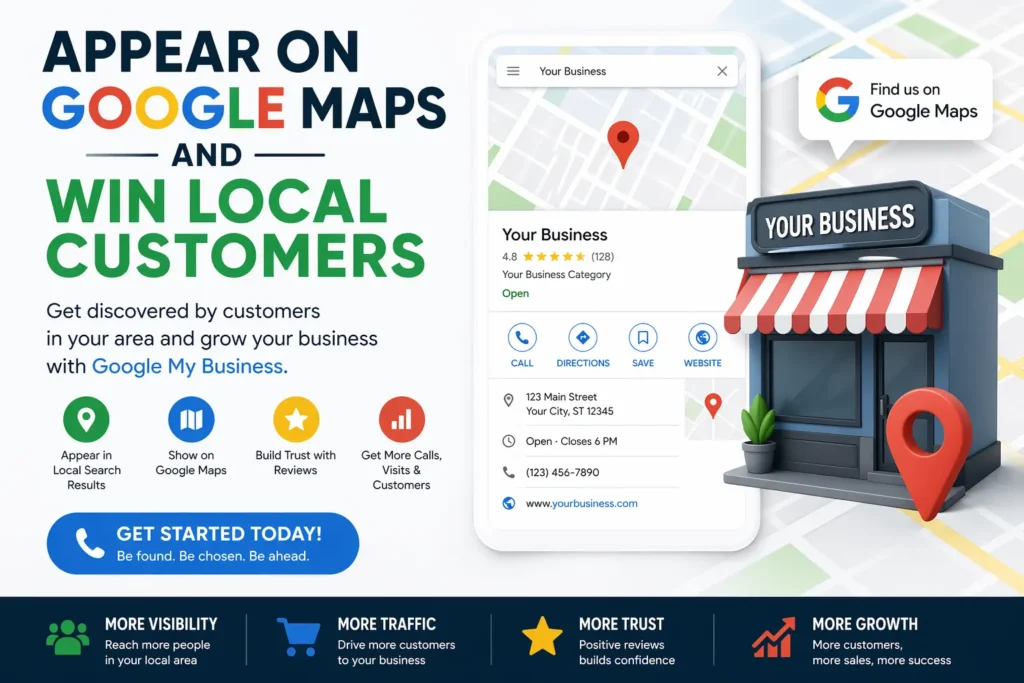
Your Google Business Profile (GBP) is the foundation of local SEO for small businesses in India. It’s the free listing that powers your appearance in Google Maps and the local 3-pack, the top three results that appear below the map in local searches.
How to Set It Up
Go to business.google.com and claim your listing. Fill in every field: business name, category, address, phone number, website, and working hours. Consistency is critical; your name, address, and phone number (NAP) must be identical across every platform.
Add at least 10 high-quality photos of your storefront, products, or services. According to Google, businesses with photos receive 42% more requests for directions and 35% more website clicks than those without.
Step 2: Target the Right Local Keywords
Keyword research for local SEO is simpler than most people think. Start by listing what your customers would search for, then add a location modifier.
For example:
- “chartered accountant in Chennai” instead of just “chartered accountant”
- “women’s boutique Jaipur” instead of “women’s fashion”
Use Free Tools to Find High-Volume Keywords
Google’s own Search Console, Google Keyword Planner, and Ubersuggest are excellent starting points. Focus on keywords with local intent and moderate competition, such as long-tail keywords like “Best digital marketing agency” that convert far better than broad terms.
Once identified, integrate these keywords naturally into your GBP descript
Step 3: Build Local Citations and Earn Reviews
A citation is any online mention of your business name, address, and phone number. Listings on platforms like Justdial, Sulekha, IndiaMart, and Yelp India strengthen your local authority and signal credibility to Google.
Aim for consistent NAP information across all directories. Even minor discrepancies like “St.” vs “Street” can dilute your local ranking signals.
Reviews Are a Ranking Factor
Google’s algorithm actively considers the quantity, quality, and recency of customer reviews. Businesses with a higher volume of positive reviews consistently outrank competitors in local search results.
Send a follow-up WhatsApp message or SMS to satisfied customers with a direct link to your Google review page. A simple ask, done systematically, can dramatically improve your review count within weeks.
Step 4: Optimise Your Website for Local Search
Your website should include a dedicated page for each location or service area you operate in. Each page must feature:
- The target keyword in the page title and H1 heading
- An embedded Google Map
- Your full NAP details are in the footer.
- Locally relevant content (neighbourhood names, landmarks, local events)
Page speed also matters. Google’s Core Web Vitals data shows that sites loading in under 2.5 seconds rank significantly higher, a critical factor given that most Indian users browse on mobile networks.
Conclusion: Local SEO for Small Businesses in India Is a Long-Term Asset
Local SEO for small businesses in India isn’t a one-time task; it’s an ongoing strategy that compounds over time. Businesses that claim their Google Business Profile, optimise for local keywords, build consistent citations, and earn genuine reviews create a durable competitive advantage that paid advertising simply cannot replicate.
Start with your Google Business Profile today. Fill it completely, add photos, and ask your next five customers for a review. Those three actions alone will put you ahead of most of your local competitors.
Your customers are already searching. The only question is whether they find you or someone else.