Google AI Mode Small Brands
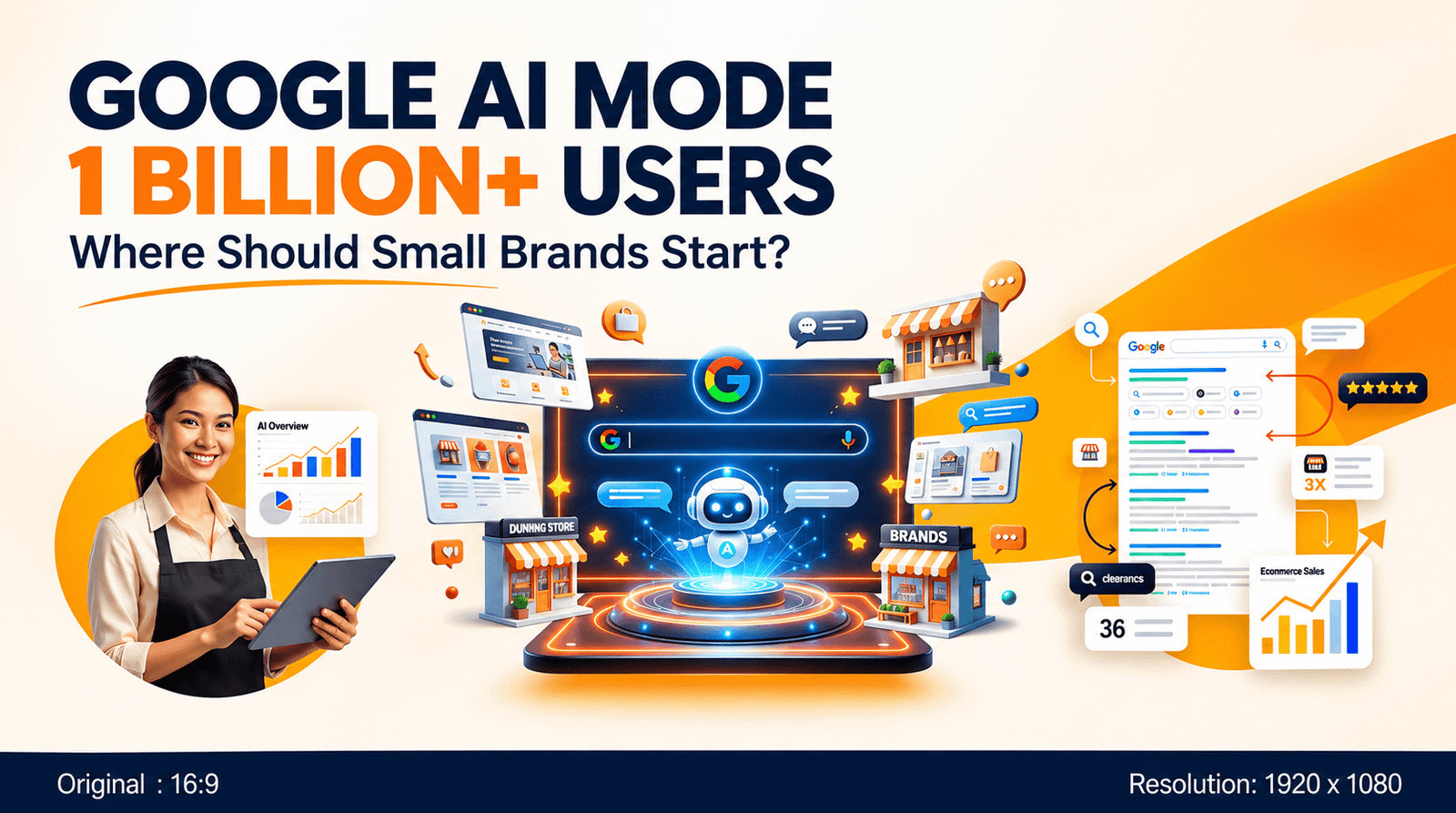
Google AI Mode has just passed the 1 billion user mark. Here’s Where Small Brands Should Start
Google says AI Mode is now being used by over a billion people each month. For the small business owner that’s another thing to think about. It doesn’t have to be. It’s actually a pointer to how your customers are now searching. They’re asking longer questions, they’re following up, they’re comparing and they expect a bit more of a conversation than just a list of links.
We spend our days at Ayn Media helping brands get found. Here’s how we’d do it in plain speak.
What Google actually announced
Google has confirmed the 1 billion monthly user milestone for AI Mode in its update on how the feature is changing search. It also confirmed that AI Mode queries are typically 2-3x longer than classic searches and that more people are searching with voice and images.
Imagine the difference. Yesterday’s query was “digital marketing agency Chennai”. Today’s could be “who can do SEO and Instagram ads for a very small bakery on a very tight monthly budget?” The second one is far more messy, far more personal and is by far the one you want to be able to answer properly.
Three shifts to expect
Specific answers win. A page built around a single keyword is going to have a very difficult time with a long, multi-layered question. A page that will tell you how it works, who it’s for and what it costs has a genuine chance.
Your brand is more than text. Logos, screenshots, product photos, diagrams and all the other business details help a search system to understand who you are. If your branding is all over the place and inconsistent then you’re going to be much harder to identify and much harder to trust.
Measurement gets increasingly fuzzy. Search Engine Journal reported in May that Google had added more links within its AI search results without providing the SEOs with any new click data. You’re going to have some customers who come through as a result of an AI-assisted journey which your analytics will simply not be able to account for.
Five moves worth making this month
- Start with the pages that earn money. Your service and offer pages come before the blog. Open each one with a clear, direct answer, explain your process and show proof. If you’d like a hand with that then our team in Chennai can absolutely help you with that.
- Make your details identical everywhere. Business name, services, address, phone number and logo should all be the same across your website, your Google profile and your social media pages.
- Answer the next question as well. Once someone has read your answer what will they ask next? Cost? Timeline? Results? Put those answers on the page as well.
- Treat visuals as content. Clean screenshots, original photos and simple diagrams give the AI-powered search far more to work with and give the visitor more to go on.
- Attach proof to every claim. If you’re claiming to deliver results then point to a case study, a client reference or your portfolio.
What not to do
Don’t go out and publish 20 thin “AI-optimised” blog posts and hope for the best. Don’t try to create a robotic voice for AI, your normal helpful voice is the thing. Small brands will generally win over the bigger, more generic competitors by being clearer and more honest. Don’t wait for the clean analytics to come in before you do anything either, they’re not going to come in any time soon.
What to track besides rankings
- Branded searches, meaning people typing your business name
- Enquiries from calls, WhatsApp and contact forms
- Visits to service pages and case studies
- Mentions on credible third-party sites
Rankings still matter of course, but visibility, trust and action together give you the full picture.
The bottom line
AI mode isn’t going to replace good SEO. It’s just going to raise the bar for it. Good pages, good proof, a genuine brand still do the work. The difference is that they’re going to have to work for longer, more specific questions. If you’d like some help with your key pages then do get in touch with our team at Ayn Media and we’ll look at them.