How Much Should a Small Business Spend on Digital Marketing in 2027?
How Much Should a Small Business Spend on Digital Marketing in 2027?
Digital marketing has become an important investment for businesses looking to attract customers, build brand awareness, and increase revenue. Whether you run a startup, retail store, educational institution, healthcare business, or service company, having an online presence is no longer optional.
However, one question every business owner faces is: How much should a small business spend on digital marketing in 2027?
Should you invest ₹15,000, ₹25,000, or ₹1 lakh every month? The right answer depends on your business goals, industry, competition, target audience, and expected growth.
Let’s understand how to plan a practical digital marketing budget for your business in 2027.
1. Understand Your Business Goals Before Setting a Budget
Before deciding how much to spend, identify what you want your marketing investment to achieve.
Different businesses have different priorities. A newly launched brand may focus on awareness and visibility, while an established business may prioritise qualified leads, website traffic, and sales.
Your marketing budget should support specific objectives such as:
- Increasing brand awareness and online visibility.
- Generating quality leads and customer enquiries.
- Driving website traffic and online sales.
- Improving local search rankings.
- Building customer engagement and brand credibility.
Setting clear objectives helps you allocate money to the right marketing channels instead of spending without a measurable direction.
For example, businesses looking to strengthen their online presence can explore professional social media marketing services to build brand awareness, improve engagement, and connect with potential customers.
2. How Much Should You Allocate to Digital Marketing?
There is no fixed marketing budget suitable for every small business. As a practical starting point, businesses can consider allocating around 5%–12% of annual revenue towards marketing, adjusting according to their growth stage, industry, and profitability.
For example, a business generating ₹10 lakh in annual revenue could evaluate a marketing budget of approximately ₹50,000–₹1,20,000 annually as an initial planning reference.
New businesses entering competitive markets may need higher initial investment to establish visibility, while established brands can optimise spending based on existing customer acquisition channels.
Remember, these are planning estimates, not guaranteed industry requirements.
3. How Should You Divide Your Digital Marketing Budget?
Spending your entire budget on advertisements may generate short-term enquiries, but sustainable business growth requires a balanced marketing approach.
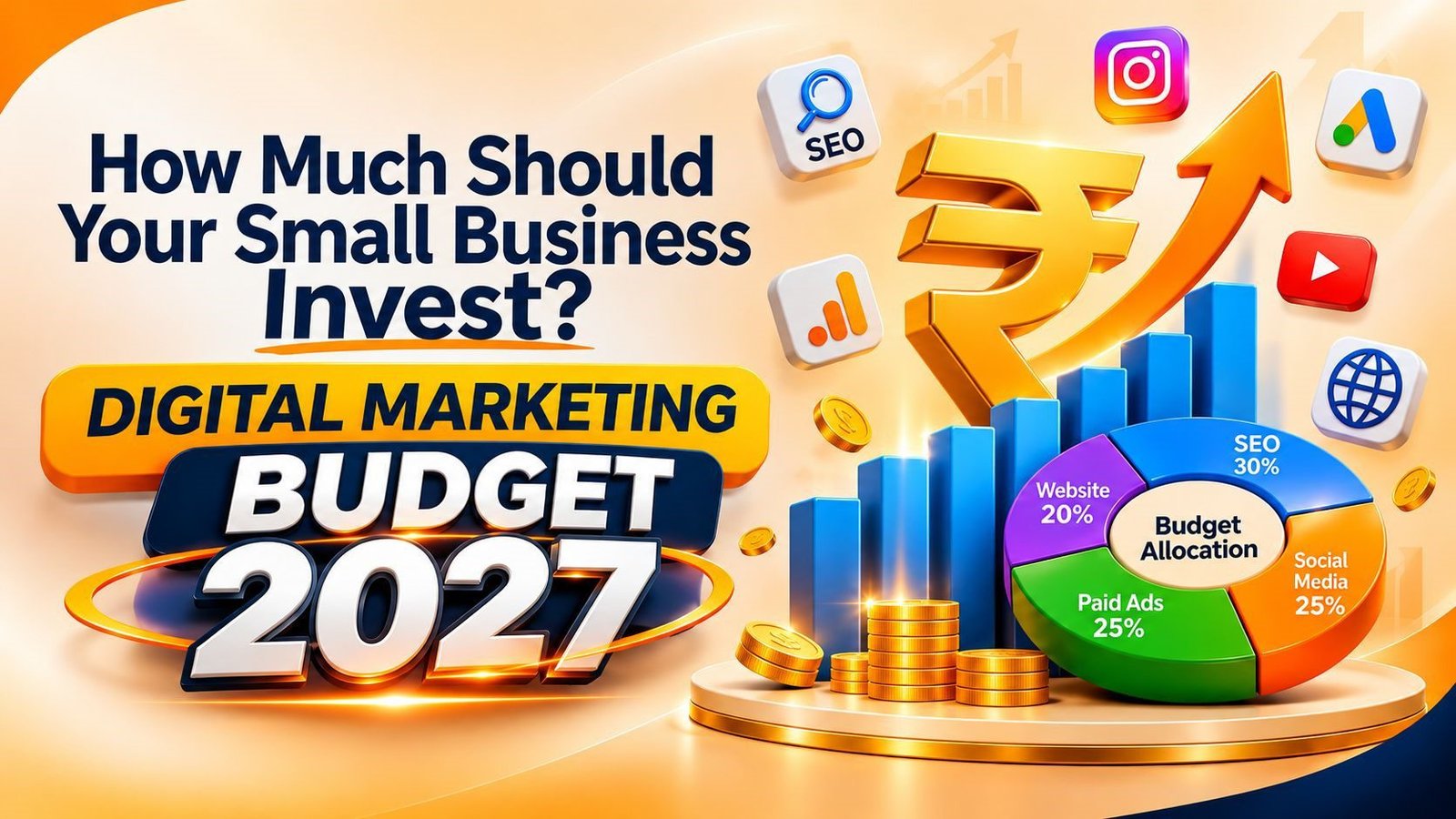
Consider the following illustrative allocation:
- SEO – 25%: Improve organic search visibility and attract customers actively searching for your services. Investing in professional SEO services can help improve search visibility and build long-term organic traffic.
- Social Media Marketing – 20%: Build brand awareness, engagement, and customer relationships through consistent content and social media campaigns.
- Performance Marketing – 35%: Invest in Google Ads, Meta Ads, and targeted lead generation campaigns. Explore digital marketing and performance marketing solutions to understand how paid campaigns can support business growth.
- Content Creation – 15%: Develop Reels, videos, creatives, blogs, and educational content. Professional advertising and creative production services can help businesses communicate their brand value through engaging visual content.
- Analytics and Optimisation – 5%: Track performance, analyse results, and identify improvement opportunities.
These percentages are a sample allocation, not a universal formula. Your business requirements may demand a different distribution.
4. Factors That Influence Your Digital Marketing Costs
Your marketing expenses depend on several important factors.
Industry Competition: Businesses operating in competitive industries may need higher advertising budgets to reach their target audience.
Target Location: Marketing to a local audience may require a different investment compared to targeting customers across multiple cities or states.
Business Stage: New businesses generally need to invest in brand awareness, content development, and audience building before expecting consistent enquiries.
Marketing Objectives: Generating website traffic, building brand recognition, and acquiring qualified leads require different strategies and budgets.
Advertising Competition: Your advertising costs can change depending on audience demand, competition, campaign quality, and platform performance.
Your website also plays an important role in converting marketing traffic into enquiries. Investing in professional website development services can improve user experience, website performance, and the overall customer journey.
5. Don’t Confuse Advertising Spend with Agency Service Fees
One common mistake business owners make is treating their entire marketing budget as advertising expenditure.
There are two different investments:
- Agency service fees: Payment for strategy, campaign management, SEO, content creation, creative designs, reporting, and optimisation.
- Advertising budget: Money paid directly to platforms such as Google and Meta to display advertisements.
Understanding this difference helps you calculate your actual marketing investment and evaluate campaign performance more accurately.
Before choosing an agency, ask for a clear breakdown of monthly service fees, advertising expenditure, deliverables, and additional costs.
6. Measure Results Before Increasing Your Marketing Budget
A higher marketing budget does not automatically guarantee better results.
Track important performance indicators such as cost per lead, qualified enquiries, conversion rate, customer acquisition cost, website traffic, and return on advertising spend.
Review these numbers regularly. Identify which campaigns attract genuine customers and which channels deliver the best business value.
Instead of increasing your spending immediately, improve your targeting, content, landing pages, and conversion process.
Final Thoughts: Invest Smartly, Grow Strategically
The right digital marketing budget for 2027 is not about spending the most money. It is about investing in the right strategy, reaching the right audience, and measuring meaningful business results.
At Ayn Media, we believe every business deserves a marketing strategy aligned with its goals and growth potential.
As a digital marketing agency in Chennai, Ayn Media helps businesses grow through strategic SEO, social media management, content creation, and performance marketing.
Whether you are launching a new business or scaling an established brand, the right marketing investment can help you build visibility, attract potential customers, and create sustainable growth.
Planning your 2027 marketing budget? Visit Ayn Media and take the first step towards smarter digital growth.